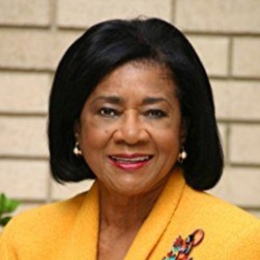
Facts of Belva Davis
| Date of Birth : | |
|---|---|
| Age : | 94 years old |
| Family Name : | Davis |
Relationship short Statistics of Belva Davis
| What is Belva Davis marital status ? ( married,single, in relation or divorce): | Married |
|---|---|
| How many children does Belva Davis have ? (name): | 0 Children |
| Is Belva Davis having any relationship affair ?: | No |
| Is Belva Davis Lesbian ? | No |
Relationship and Marriage
Belva Davis, born Belvagene Melton on October 13, 1932, Monroe, Louisiana, was an American trailblazing African-American television and radio journalist. She grew up in Oakland, California, and became the first Black woman television reporter in the United States. West Coast after being hired by San Francisco's KPIX-TV in 1966.
In a nearly half-century career, she covered significant social and political events with thoughtful, perceptive reporting and was honored with eight Emmy Awards. Davis retired in 2012 from hosting "This Week in Northern California" on PBS station KQED and passed away peacefully in 2025 at the age of 92, remembered as a trailblazer who opened doors for diversity in the field of journalism.
Cause of Death
Belva Davis died of natural causes at the age of 92. The death marked the end of a life dedicated to success and service to journalism and civil rights. She was widely mourned, with many taking time to reflect on her legacy as a pioneering journalist who shattered racial and gender boundaries in the field of journalism and inspired generations of reporters to follow in her footsteps.
Relationship and Marriage
In 1952, Belva Davis married Frank Davis on January 1st and had two children with him. The marriage later broke up, and in 1967 she met William "Bill" Moore, a trail-blazing photojournalist and California's first full-time African-American news cameraman employed by commercial TV, while working at KPIX-TV.
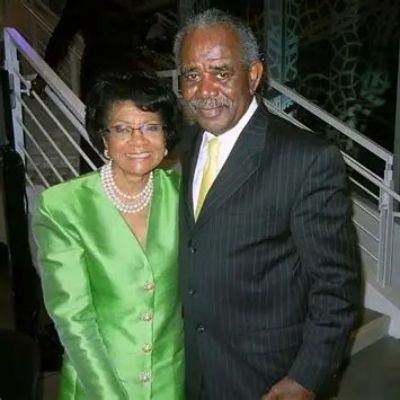
They did marry later and lived in the San Francisco Bay Area. Throughout most of her life, Davis kept her personal private relationships to herself, focusing largely on her trailblazing journalism career and fight for equality in the journalism profession.
Early Life and Background
Born to a teenage single mother during the Great Depression, Belva Davis spent her formative years living with relatives before rejoining her family in a small West Oakland apartment. Despite these difficulties, she was a star pupil and the first in her family to graduate high school in 1951. She even gained acceptance at San Francisco State University, but financial limitations kept her out of college.
Davis began as a typist but soon developed a passion for writing and journalism and freelanced with magazines as early as 1957. Her upbringing in a predominantly Black working-class neighborhood played a profound role in her commitment to telling stories about oppressed communities.
Recently Written: Heinz Baines Biography
Career Milestones
Davis began her career in radio at Oakland radio station KNEW AM prior to breaking ground in television as the first African American woman TV journalist in the West Coast with KPIX in 1966. She went on to work with major Bay Area stations including KRON-TV, KTVU, and public television station KQED. Her assignments were throughout the years and included a wide variety of important social and political issues.
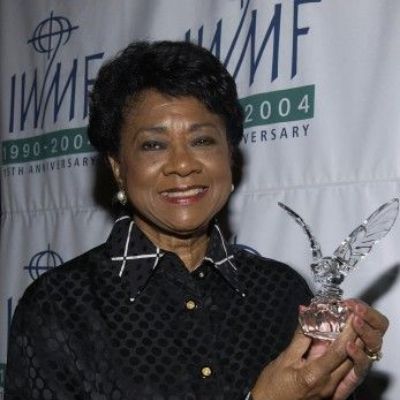
She also hosted talk shows and anchored news programs and was a familiar and trusted face on Northern California television. Throughout her life, Davis was valued for her integrity, journalistic honesty, and ability to bring major but often overlooked stories into the public spotlight.
Coverage Highlights
Davis's coverage included reporting the most historic and eventful events in American history since the 1960s. She chronicled the Berkeley campus student demonstrations which redefined political activism, the rise of the Black Panther Party, and the tragic Jonestown mass suicide. She witnessed the assassination of Supervisor Harvey Milk and Mayor Moscone, both iconic events in San Francisco history. Among the more important topics that she wrote about are the disastrous AIDS and crack cocaine pandemics and international terrorism attacks such as the bombing of the United States embassy in Tanzania. Her articles often emphasized issues of race and gender, raising awareness of injustices and transforming them.
Advocacy and Leadership
In addition to her work as a journalist, Davis was a staunch crusader for fairness in the media industry. As AFTRA's National Equal Employment Opportunities Chair, she advocated for diversity and inclusion for minorities, women, and disabled individuals on television. Her efforts opened doors for many individuals who had traditionally been excluded from media careers. Davis's activism did not end in her efforts within the union but continued with raising sensitivity and accommodation for marginalized groups in her advocacy in her stories and public appearances.
Awards and Honors
Belva Davis received numerous awards throughout her career, among which were eight regional Emmy Awards that proved her journalistic skill. She received lifetime awards from some of the leading institutions of the world, including the International Women's Media Foundation, the National Association of Black Journalists, and the Northern California chapter of the National Academy of Television Arts & Sciences.
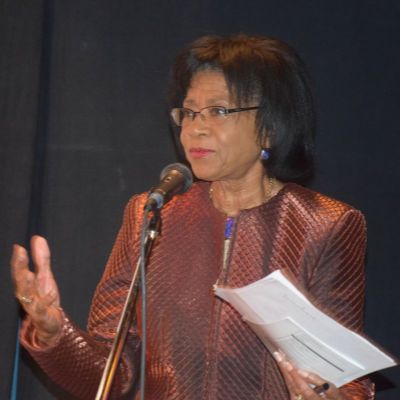
In 2018, she was inducted into the California Hall of Fame by Governor Jerry Brown for her illustrious career in journalism and social justice. Her pioneering career has been widely recognized as a revolutionary power force in the media industry.
Publications
Belva Davis published her memoir, "Never in My Wildest Dreams: A Black Woman's Life in Journalism," in 2010 to narrate her life, career challenges, and success with the intersections of race and gender discrimination. Her book gives an insight into her strength and pioneering spirit as a tale of inspiration for the future generation of journalists and activists.
Retirement and Legacy
At retirement in 2012, Davis left a legacy as a proud and pioneering woman in American journalism. She remained engaged with the media and community, supporting the pillars of integrity and perseverance. Her legacy broke doors of opportunity for all women and minorities in television news, and she is still warmly remembered for leaving an unerasable imprint on the media and for bringing gender and racial equality both to on and off-air levels.
For more celebrity content, stay tuned at Married Wiki.
